
-
![Unpave My Path, 2026]()
Unpave My Path, 2026
-
![Flower and Rain, 2026]()
Flower and Rain, 2026
-
![Installation View]()
Installation View
-
![Tinieblas, 2026]()
Tinieblas, 2026
-
![Fallen Angel [Lucifer (Light-bearer)],2024]()
Fallen Angel [Lucifer (Light-bearer)],2024
-
![Installation View]()
Installation View
![Fallen Angel [Lucifer (Light-bearer)],2024](https://images.squarespace-cdn.com/content/v1/6a35952283b23363e4b8e6e0/279e3b11-3598-466e-98a3-fb46b784ce34/K%26G-Oh-you-assemblageurs-60.jpg)
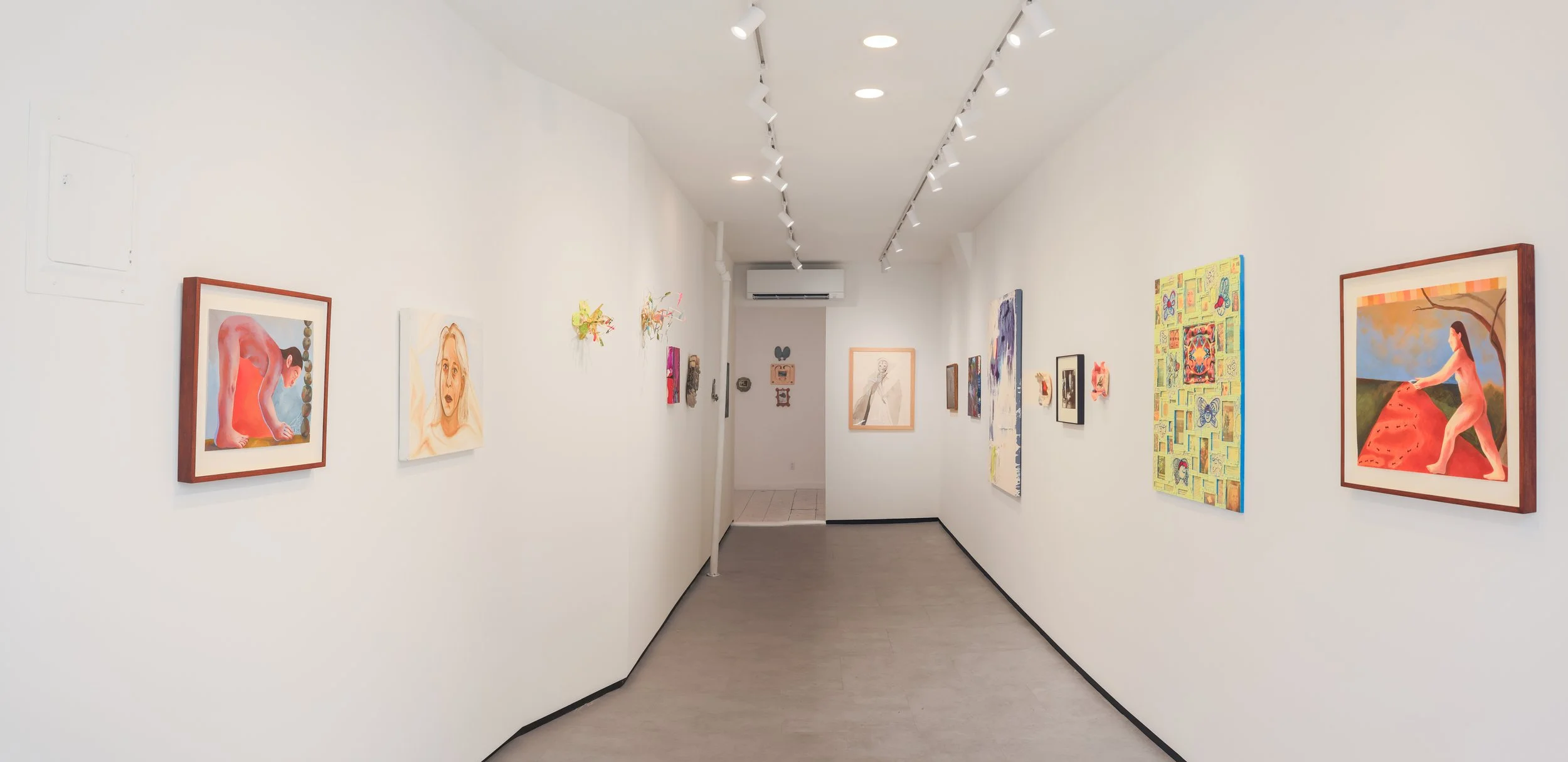
“Oh! You assemblageurs”1
Over the years, I’ve considered the role of the artist in several different ways. As an arranger, ceaselessly trying to order in a discordant and violently “irrational” (beyond rationality?) world. As a fool, naively or heroically side-stepping the logic and set path of that given world. Now, I’m visualizing the artist’s task as one of accumulation and connection. Happening upon a strange loanword, assemblaguers, in Wayne Koestenbaum’s recent novel, I set to contextualize artists that I thought were working in a mode like assembly.
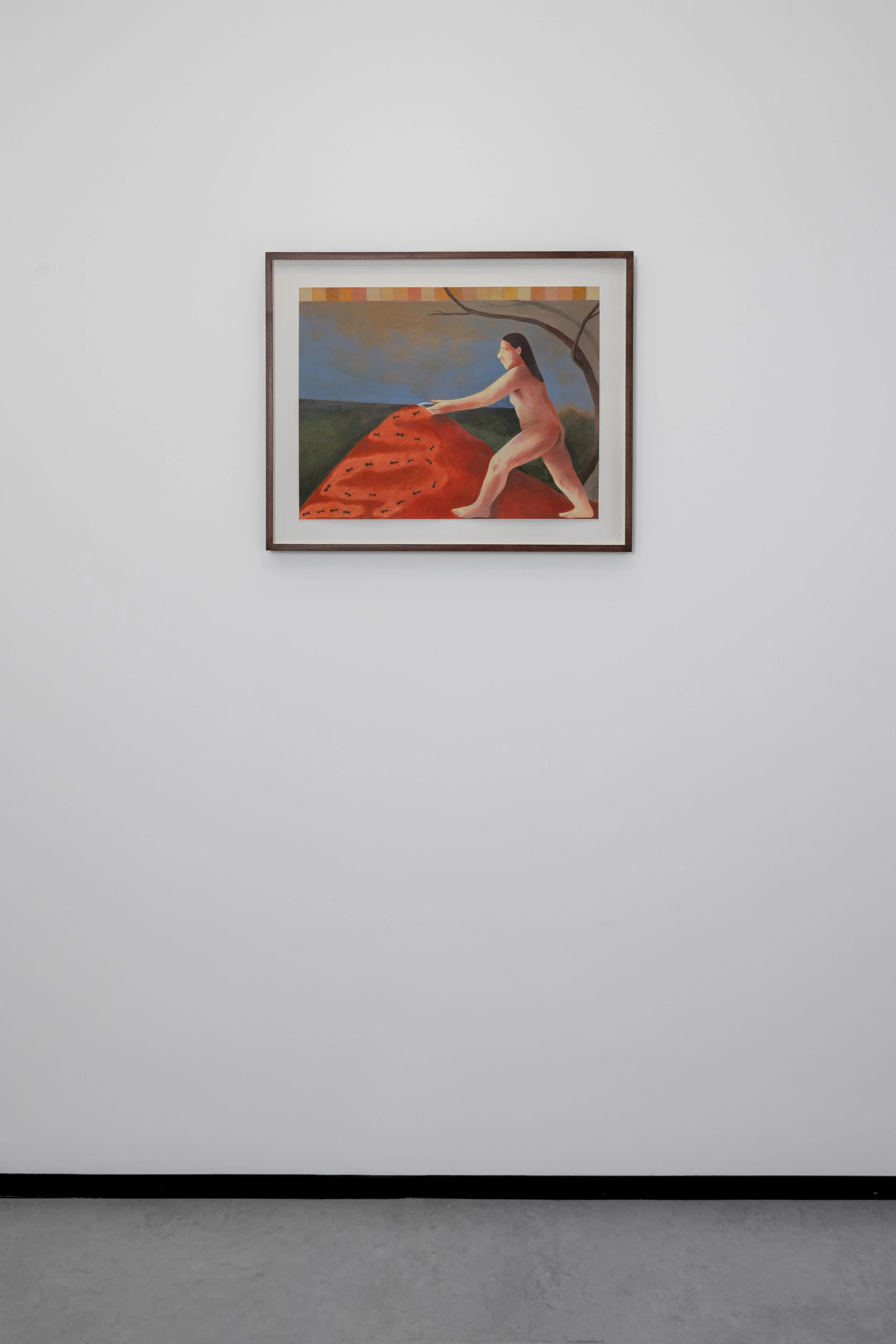
Lily Wong’s figures are often caught in the task of building something precarious, like the pile of rocks stacked on top of each other in “Builder”. Here the figure has been balancing this stack for so long a cobweb has woven to her hand. In “Unpave my path” a line of ants lead each other to the tip of a knife. The tree has a photographic cast shadow, suggesting this is a set and not a naturalistic environment. Everything has been placed in the scene, assembled precisely.
Made across years, the paintings of Hannah Beerman collect a wide variety of materials, objects, and gestures to buzz with a vibrational presence. Describing her process, Beerman says “The paintings have relationships with each other too: sometimes they’re like siblings, sometimes like friends or enemies. They try out different parts, and sometimes it just doesn’t work out. Sometimes one painting is jealous of an element or some color or texture that another painting has, so I have to rip that part off and give it to the one that’s asking for it.”
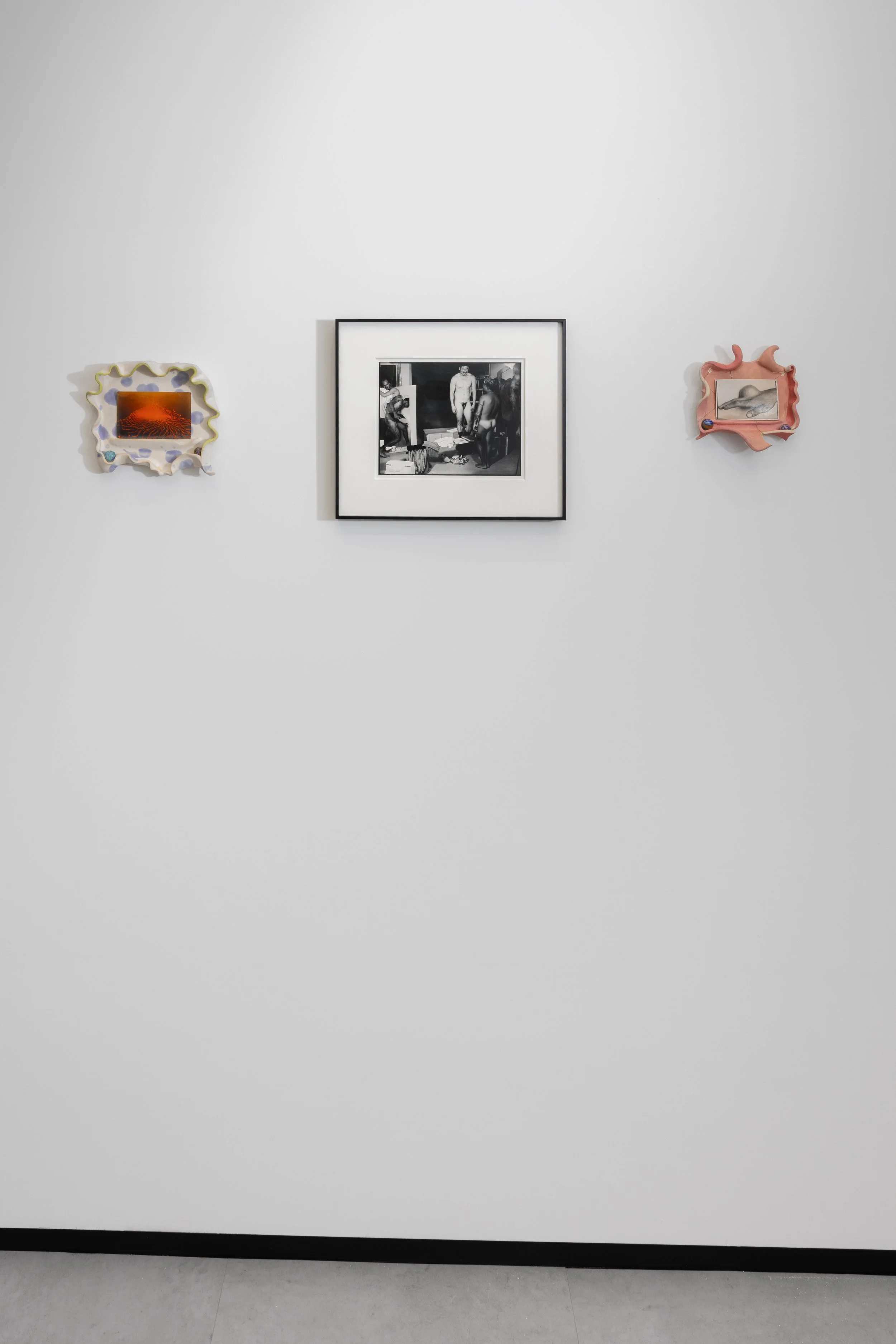
Jenna Beasley makes low-relief sculpture-painting hybrids. In these surfaces, images and symbols are embedded and mutated. They seem to be surfaces that have accumulated textures and pattinas over the years, but have been chipped away from their original source, found and recontextualized as artifacts. Image, scale, and material are all pushed and prodded, creating an object that exudes mystery. I know you from somewhere, but where? Bobby Walsh’s small ceramic sculptures, on the other hand, were formed with the precise intention to frame his collection of found photographs. A ceramics practice developed alongside his collecting of images, eventually overlapping. The sculptures are inflected by what they contain. For example, marbles grow from one frame housing an image documenting the hand tumor of some lost-to-time patient.
E.E. Ikeler’s new work could be categorized as visionary latrinalia. They’ve recently printed out many of their phone screenshots and have begun to collage and affix these fleeting, topical images and texts to their paintings. They’ve also placed images of previous paintings they’ve made and line-based drawings in this complex web, structured by an excessive amount of yellow miniature bricks. There’s an immediate estrangement seeing these digital apparitions solidified and pinned down. Seeing these images stuck in E.E.’s meticulously-constructed paintings, one can imagine viewing them decades or centuries in the future. There’s the itchy feeling that one has little to no control over what of their time and place in the universe will be remembered, or how.
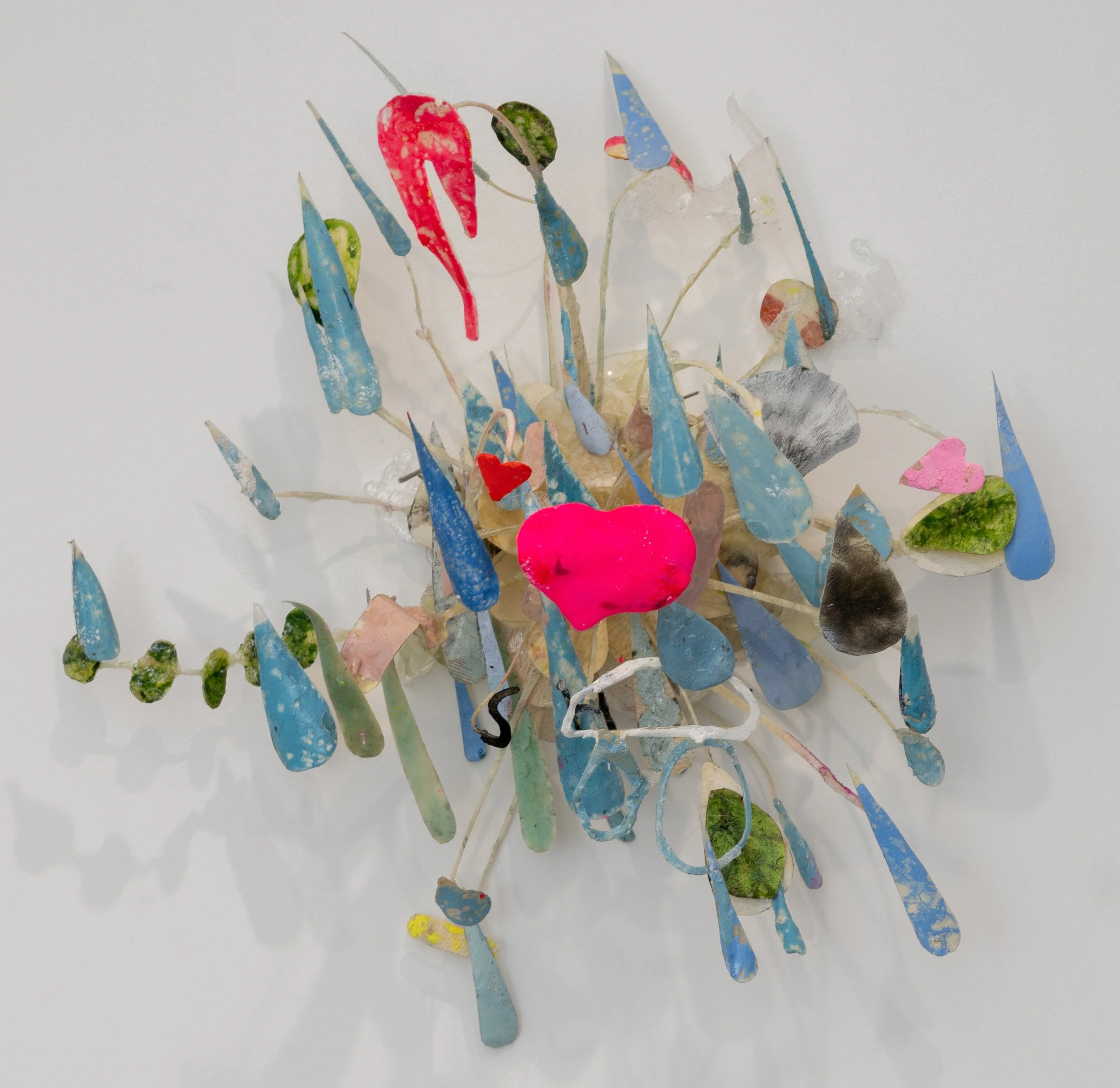
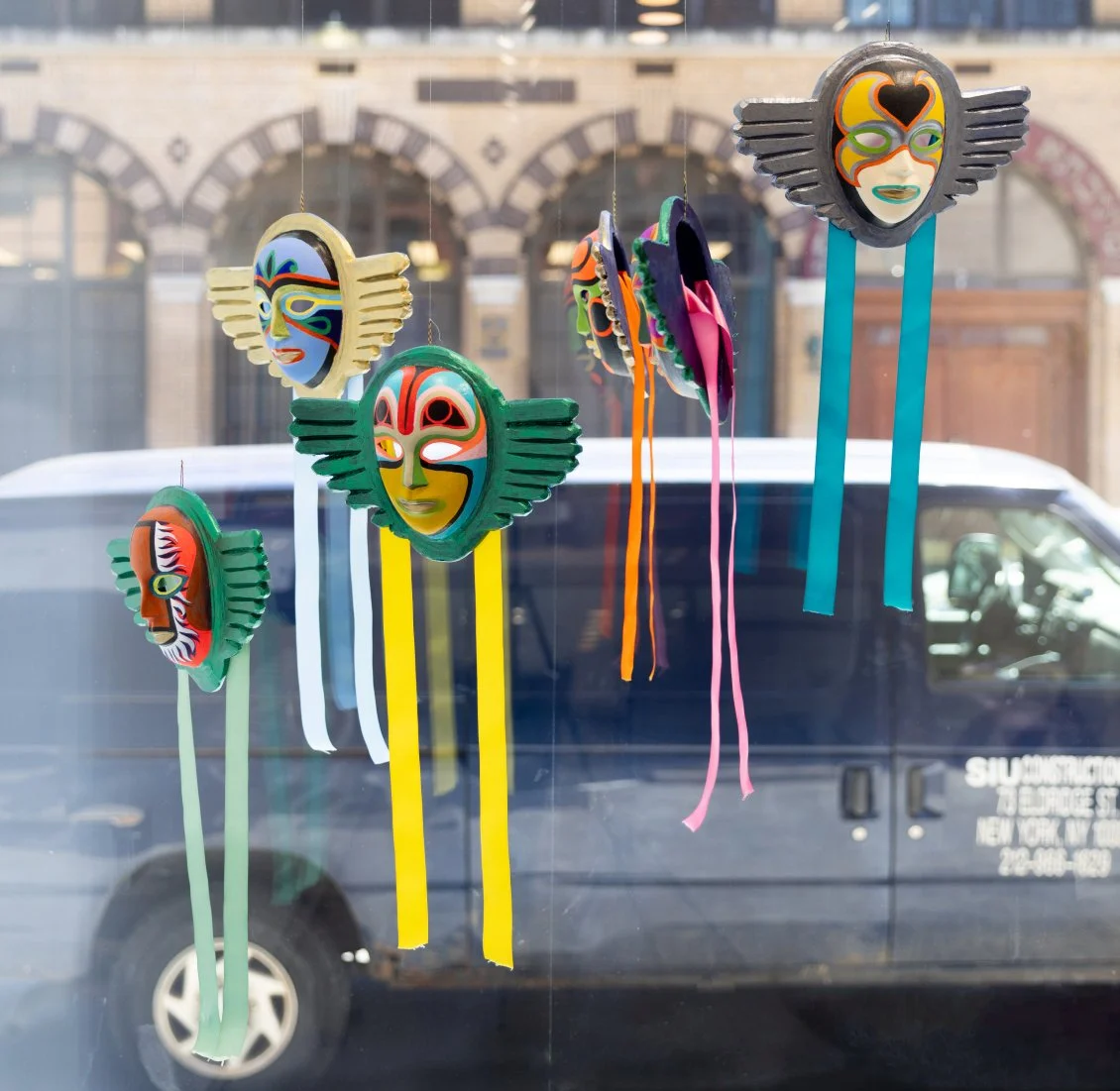
Thinking of the body itself as an accumulation, one that is constantly expanding and shedding, relates to how Steven Thompson's pieces are made over years of intense rework and editing. The two flowers included in this exhibition are stand-alone paintings but also were made with the intention of becoming a part of a larger, currently in-progress painting. His work is distinctive for a material obsession paired with the fragility and precarity of the set-ups. Amanda Barker's “This Is All We Are” is a ghostly afterimage of a painting. She often explores images summoning Hauntology, specifically related to the writings of Mark Fisher. He describes two qualities of the category as being “that which is … no longer, but which remains effective as a virtuality (the traumatic ‘compulsion to repeat’, a fatal pattern) [and] … that which (in actuality) has not yet happened, but which is already effective in the virtual.” The title of Barker’s painting plays with this, the verbs “Is” and “Are” are in the present tense, but the descriptor of “All” gives a finality, or a retrospective gaze, to the relationship, an impossible vantage to have in the present tense. Time is slippery and the past mingles with the future, both casting exposures over the present. The artist’s practice as one of a self-generating project is clear in Miguel Martinez’s incredibly wide-reaching multi-pronged and multi-media body of work. Consistent in imagery and symbolism, the lexicon Martinez has 1 to the tune of “Oh! You Pretty Things”developed triggers inspiration across mediums. For example, in “Bandera”, Martinez has created an ink wash descriptive of his mask sculptures also on view. These masks enter his drawings, paintings, and collages. They are worn in performances that then lead to photographs and zines and a continuation of this image cycle. Rhyming with this, another artist in this exhibition uses his studio as the self-generating engine of the work. Ian Lewandowski’s photographs have increasingly become a record of the studio as container: for poses, actions, props, other images. He has developed an environment that is maximally cross-referential and layered. “Studio Portrait no. 109” is from a collage-modelled series Lewandowski made titled SOLILOQUIO, for the Madrid-based Kink Ediciones. Across this scene, multiple independent interactions are layered, in a space that holds the echoes of many previous scenarios also photographed.
The interest in accumulation and assembling various times, perspectives, sources may reach its grandest articulation with the two paintings of Tyler Akers. Formally, the compositions rely on the intricate patterning of stars and marks. Conceptually these works riff on visionary art and illuminated manuscripts and suggest that those have always been a form of sci-fi. Akers uses the symbol of the angel for several projections like our thoughts on gender and sexuality, as well as the Jungian concept that “...if aliens came, they would assume the images of religion to engender a receptive response.”
- Anthony Cudahy
June 2026